28% of the population are Tribals (aboriginals). The majority of them are Santals. Their language is Santali, but they learn Hindi in School. They practice and live their own culture with its rich traditions. There is peaceful co-existence with Hindus, Moslems and Christians.
Many of them have a bit of property and access to water. What is important to them is: “Today“, securing the future comes only second. Except for the cities, there is no electricity in villages and settlements. The people are poor, often without work or income. Malaria, Typhoid and Tuberculosis are still deadly sicknesses.
Making formal education possible and motivating the people for it, is still a continual task of Christian institutions, in spite of the many years after the official school regulation of the State. Unfortunately, many of the educated Santals migrate into the cities.
With great dedication and much support by religious communities and benefactors, the dioceses were able to achieve and build up much. Many self-help groups have become active, motivate and animate others, influence life in the villages and promote social development in this way.
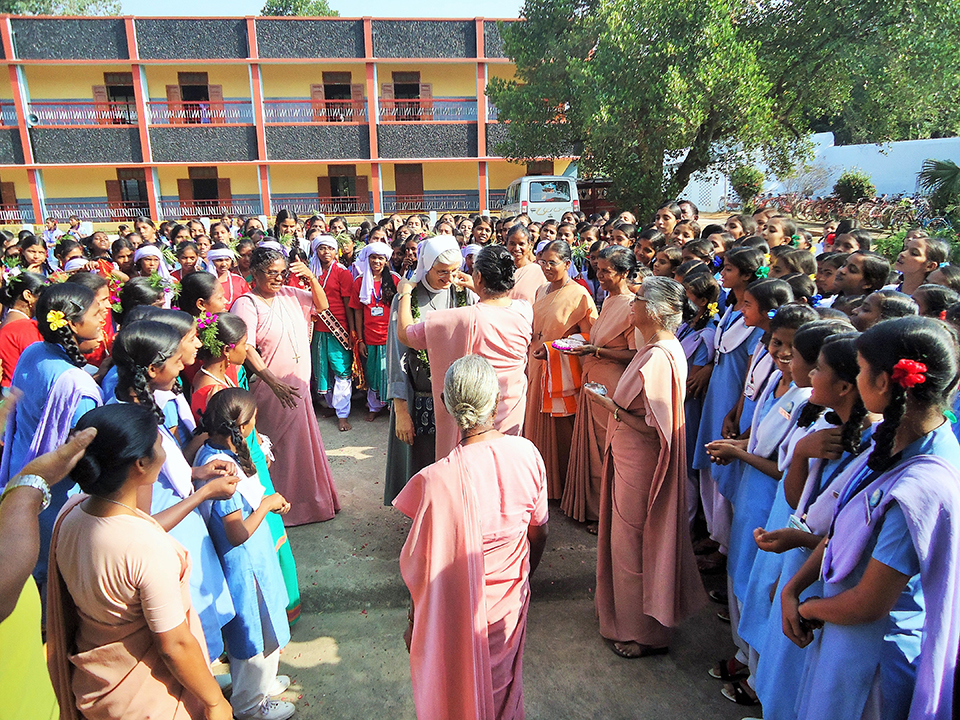
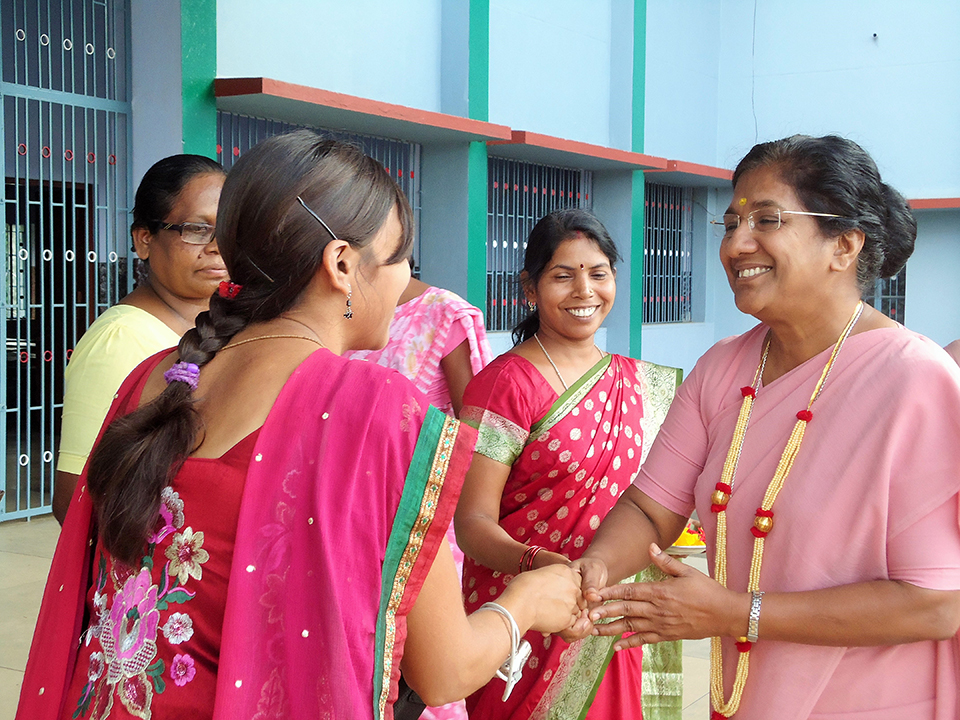
Part of the important options of the Holy Cross Sisters in the North-East Province, next to their efforts for the Dalits, has been their engagement for the Santals in Jharkhand for more than 40 years. The communities are located in nine places. With great determination and love, the sisters counteract social injustice and poverty in all its forms. They are active in Hospitals, Health Centers, Schools, Boarding Schools, Adult Education Programs, in many pastoral and social services, and are present and active in parishes and distant villages. Here, too, the efforts against Human Trafficking are part of the urgent needs.
We have got photos from some of the communities in the Santal-region.